If you’re living with irritable bowel syndrome (IBS), you probably know how confusing food choices can become.
One day, you enjoy a meal without any problems. The next, something that seems perfectly healthy leaves you feeling bloated, uncomfortable or worried about your digestion.
Perhaps you’ve already tried avoiding bread, dairy or certain vegetables. Maybe you’ve searched for a low FODMAP food list, only to find conflicting information about what you can and can’t eat.
If that sounds familiar, you’re certainly not alone.
Here’s something reassuring: following a low FODMAP diet doesn’t mean giving up all your favourite foods or eating the same few meals every day.
There are plenty of delicious, nutritious options available. The key is understanding which foods are naturally low in FODMAPs, which ones may need limiting temporarily and why portion sizes matter.
In this practical guide, you’ll discover:
- Low FODMAP foods you can include in your meals.
- High FODMAP foods commonly limited during the initial phase.
- Simple food swaps that make everyday eating easier.
- Why serving sizes can change a food’s FODMAP classification.
- Important updates from Monash University’s 2025 food testing.
- How to create balanced, satisfying meals without unnecessary restrictions.
You’ll also find a free downloadable low FODMAP food list to keep handy when planning meals or shopping.
Because managing digestive symptoms should help you feel more comfortable around food, not more afraid of it.
Table of Contents
What Foods Can You Eat on a Low FODMAP Diet?
The good news is that the list of suitable foods is probably longer than you imagine.
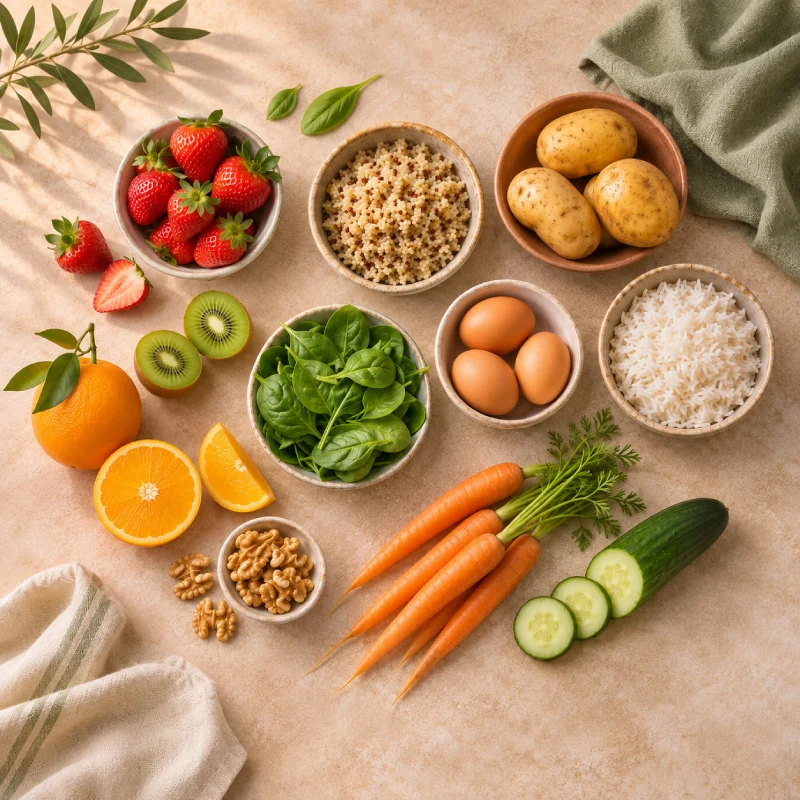
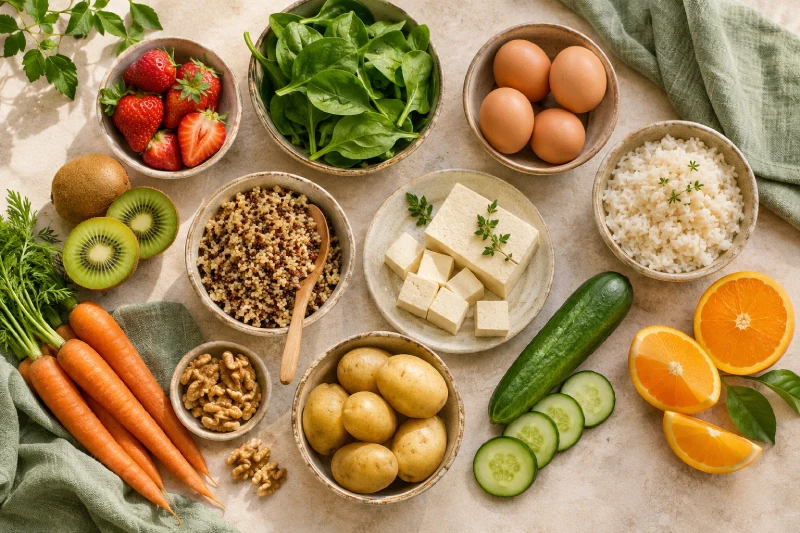
You can still enjoy fresh vegetables, colourful fruit, nourishing carbohydrates, protein-rich meals, dairy products and delicious snacks.
A low FODMAP diet temporarily reduces certain fermentable carbohydrates that may contribute to digestive symptoms in people with IBS.
These carbohydrates include fructans, galacto-oligosaccharides (GOS), lactose, excess fructose and polyols such as sorbitol and mannitol.
If you’re new to this approach and would like to understand the science behind it, our Beginner’s Guide to the Low FODMAP Diet for IBS explains how the diet works and why it may help.
For now, let’s focus on something practical: what you can put on your plate.
Low FODMAP Vegetables
Vegetables provide important vitamins, minerals, antioxidants and fibre. They also add colour, texture and flavour to meals.
Fortunately, many vegetables can be enjoyed during the initial low FODMAP phase.
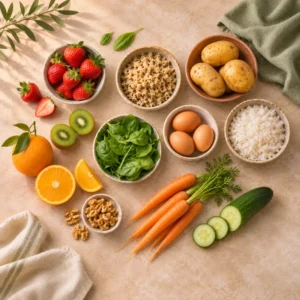
Common low FODMAP vegetable choices include:
- Carrots
- Cucumbers
- Lettuce
- Baby spinach
- Potatoes
- Bok choy
- Aubergines (eggplants)
- Green capsicum (green pepper)
- Bean sprouts
- Tomatoes, in suitable portions
- Courgettes, in suitable portions
- Green beans, in suitable portions
You can roast vegetables with olive oil, steam them, add them to salads or combine them in a comforting homemade soup.
For example, roasted potatoes and carrots with grilled chicken and fresh herbs make a simple, satisfying dinner.
A little tip: If you miss the flavour of garlic, try garlic-infused oil without garlic pieces. Fructans are not soluble in oil, so properly prepared garlic-infused oil can add flavour without the same fructan content.
Remember that vegetables such as courgettes may contain higher FODMAP amounts in larger servings. Always check the portion you intend to eat.
Low FODMAP Fruits
Fruit is often one of the first food groups people worry about when starting a low FODMAP diet.
But you don’t need to eliminate fruit.
Many fruits provide vitamin C, potassium, fibre and beneficial plant compounds while fitting comfortably into a low FODMAP eating pattern.
Suitable choices in tested portions include:
- Kiwifruit
- Oranges
- Mandarins
- Strawberries
- Pineapple
- Firm, less-ripe bananas
- Grapes
- Blueberries, in suitable portions
- Cantaloupe melon
A bowl of strawberries with lactose-free yoghurt can make a lovely breakfast or afternoon snack.
Or try sliced kiwifruit with oats and chia seeds for a nourishing start to the day.
Does ripeness matter?
Sometimes, yes.
Bananas are a good example. Their carbohydrate composition changes as they ripen, which can influence their FODMAP content.
This is why a food’s variety, ripeness and portion size can all be relevant.
Low FODMAP Grains and Carbohydrates
Carbohydrates are an important source of energy, and there’s no reason to avoid them completely when following a low FODMAP diet.
Many naturally gluten-free grains and starchy foods are suitable.
Useful options include:
- Rice
- Quinoa
- Potatoes
- Polenta
- Oats, in tested portions
- Rice noodles
- Suitable gluten-free pasta
- Corn tortillas made with appropriate ingredients
- Plain rice cakes
- Certain traditionally fermented sourdough breads
You can use rice or quinoa as the base for a nourishing lunch bowl, enjoy potatoes with dinner or prepare overnight oats for breakfast.
One important detail: gluten-free doesn’t automatically mean low FODMAP.
Some gluten-free breads, cereals and snacks contain ingredients such as inulin, chicory root fibre, apple fibre or certain legume flours that may increase their FODMAP content.
Check the ingredients rather than relying only on a gluten-free label.
And remember, the low FODMAP diet is not the same as a gluten-free diet. Wheat is often limited because of its fructans, not because of its gluten protein.
Low FODMAP Protein Foods
One of the easiest food groups to navigate is protein.
Most plain animal protein foods naturally contain negligible FODMAP carbohydrates.
Examples include:
- Eggs
- Chicken
- Turkey
- Beef
- Fish
- Seafood
Suitable plant-based protein options include:
- Firm tofu
- Tempeh, in tested portions
- Certain canned legumes, in appropriate amounts
The main thing to watch is what gets added during preparation.
Plain grilled chicken is naturally low FODMAP, but chicken marinated with garlic, onion, honey or certain sauces may contain higher amounts.
Try seasoning your meals with lemon, ginger, parsley, basil, rosemary or garlic-infused oil instead.
Low FODMAP Dairy and Milk Alternatives
If you enjoy milk, cheese or yoghurt, there’s more good news.
You don’t necessarily have to give up dairy.
Lactose is the FODMAP of concern in many dairy products, but lactose levels vary considerably.
Common suitable options include:
- Lactose-free cow’s milk
- Lactose-free yoghurt
- Cheddar cheese
- Parmesan cheese
- Other suitable hard or matured cheeses
- Certain plant-based milks, depending on ingredients and serving size
Many hard cheeses naturally contain very little lactose because of how they are produced.
If you prefer plant-based alternatives, check the ingredients carefully.
For example, soy milk made from soy protein generally has a different FODMAP profile from soy milk made from whole soybeans.
Choosing lactose-free products doesn’t mean you need to eliminate dairy altogether.
Low FODMAP Nuts, Seeds and Snacks
Snacks can still be enjoyable and varied.
Depending on serving size, options include:
- Peanuts
- Walnuts
- Macadamia nuts
- Pine nuts
- Chia seeds
- Pumpkin seeds
- Peanut butter without high FODMAP additions
- Plain rice cakes
- Suitable dark chocolate
- Lactose-free yoghurt with fruit
Nuts and seeds are particularly useful because they provide healthy fats, protein and fibre.
However, their FODMAP content can become more significant in larger portions.
Almonds, for example, may be suitable in smaller servings but contain more GOS as the quantity increases.
Rather than avoiding nuts entirely, focus on appropriate portions and variety.
High FODMAP Foods to Limit During the Restriction Phase
Now that we’ve explored the foods you can enjoy, let’s look at those commonly limited during the first phase.
Before we begin, there’s something important to remember.
High FODMAP doesn’t mean unhealthy.
Onions, garlic, legumes, apples and many other high FODMAP foods provide valuable nutrients and beneficial fibres.
They are temporarily reduced because certain fermentable carbohydrates may contribute to bloating, abdominal pain, gas or changes in bowel habits in people with IBS.
The intention is not to avoid these foods forever.
High FODMAP Vegetables
Common vegetables that may contain higher FODMAP amounts include:
- Onion
- Garlic
- White leek bulb
- Artichokes
- Asparagus
- Certain mushrooms
- Larger portions of some otherwise suitable vegetables
Onion and garlic are particularly common ingredients in sauces, soups, marinades and ready-made meals.
This can make them easy to overlook.
Try these alternatives:
- Replace onion with chives or the green tops of spring onions.
- Use garlic-infused oil instead of chopped garlic.
- Add ginger, lemon zest or fresh herbs for flavour.
- Choose suitable low FODMAP vegetables as the base for soups and sauces.
These simple changes can help you keep meals flavourful without relying on ingredients that may trigger symptoms.
High FODMAP Fruits
Some fruits contain higher amounts of excess fructose, sorbitol or other FODMAPs.
Common examples include:
- Apples
- Pears
- Mangoes
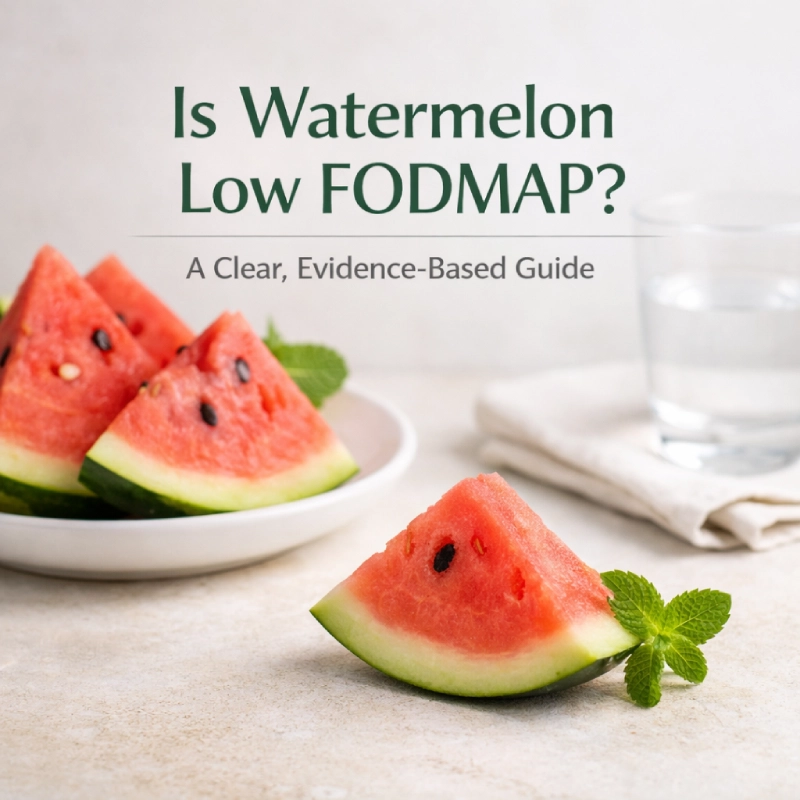
- Watermelon
- Certain stone fruits, including peaches and plums
- Some dried fruits
- Larger portions of particular berries
Instead, you might enjoy oranges, kiwifruit, strawberries or pineapple in appropriate servings.
Remember that fruit classifications aren’t always absolute.
For example, recent laboratory testing has changed our understanding of which FODMAP carbohydrates are present in some fruits.
We’ll explore these updates shortly.
High FODMAP Grains, Legumes and Other Foods
Other foods commonly limited during the initial phase include:
- Large servings of conventional wheat-based pasta
- Some wheat, rye and barley breads
- Certain breakfast cereals containing high FODMAP ingredients
- Cashew nuts
- Pistachios
- Some portions of beans and lentils
- Regular milk containing lactose
- Honey
- Agave syrup
- Products containing sorbitol or mannitol
- Foods with added inulin or chicory root fibre
Legumes deserve special attention.
They contain beneficial fibre and plant protein, and some types can fit into a low FODMAP diet in carefully selected portions.
For example, draining and rinsing canned legumes can reduce some water-soluble FODMAPs.
This doesn’t make every legume suitable in unlimited amounts, but it means you may have more options than you think.
Low FODMAP Food List: Quick Reference Chart
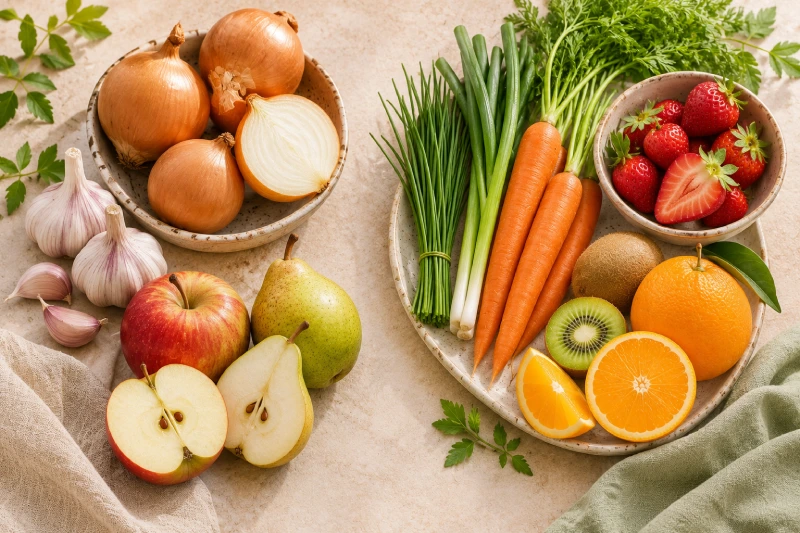
Sometimes, the simplest way to make food choices is to compare your options side by side.
The following low FODMAP food list provides a practical starting point for the restriction phase.
| Food group | Low FODMAP choices | Foods commonly limited |
|---|---|---|
| Vegetables | Carrots, potatoes, cucumber, spinach, bok choy | Onion, garlic, artichokes |
| Fruit | Kiwifruit, oranges, strawberries, pineapple | Apples, pears, mangoes, watermelon |
| Grains | Rice, quinoa, suitable oats, rice noodles | Large servings of wheat pasta, some rye and wheat breads |
| Protein | Eggs, plain fish, chicken, firm tofu | Protein dishes with high FODMAP sauces or marinades |
| Dairy | Lactose-free milk, cheddar, Parmesan | Regular milk, higher-lactose dairy products |
| Nuts and seeds | Peanuts, walnuts, macadamias in suitable portions | Cashews, pistachios |
| Legumes | Selected portions of canned, drained legumes | Large portions of many beans and lentils |
| Sweeteners | Table sugar, maple syrup in suitable amounts | Honey, agave syrup, sorbitol, mannitol |
Important: This table is a general reference, not a list of unlimited serving sizes. Some foods move between low, moderate and high FODMAP classifications depending on the quantity eaten.
Download Your Free Low FODMAP Food List
Wouldn’t it be helpful to have a simple food guide ready when you’re planning meals or walking around the supermarket?
We’ve created a practical food list showing foods commonly limited during the low FODMAP restriction phase alongside suitable alternatives.
Download Your Free Low FODMAP Food List
Save it to your phone, print it for your kitchen or keep it handy when shopping.
It’s designed to make everyday food choices a little easier.
Please remember that food tolerance and FODMAP content depend on portion size. Use the downloadable list as a helpful overview alongside current tested serving information.
Low FODMAP Serving Sizes: Why Portions Matter
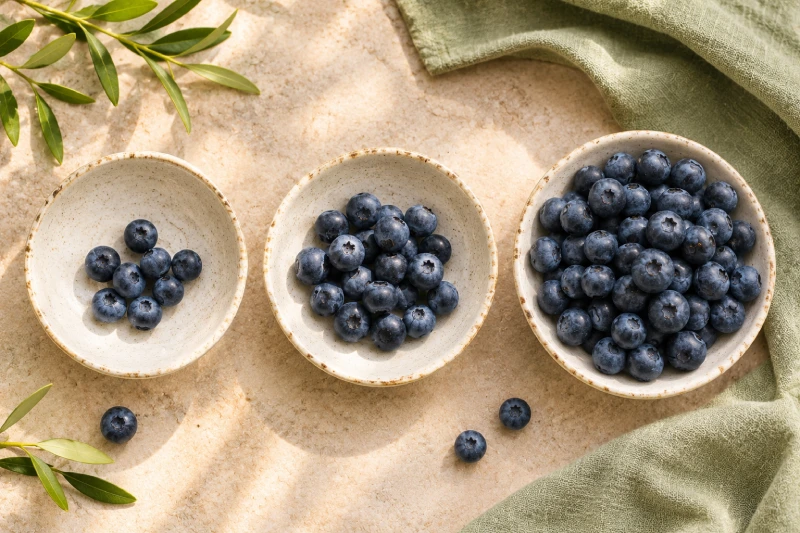
One of the biggest misconceptions about the low FODMAP diet is that foods are either completely safe or completely forbidden.
In reality, FODMAP content is often dose-dependent.
A food may be low FODMAP in a small portion but contain moderate or high amounts in a larger serving.
This is why two people can eat the same food and experience very different symptoms.
Can a High FODMAP Food Be Low FODMAP in Small Amounts?
Sometimes, yes.
A food classified as high FODMAP at a typical serving size may still have a smaller portion that fits within a low FODMAP diet.
Similarly, a food considered low FODMAP at one serving may become higher in FODMAPs when the quantity increases.
Consider foods such as almonds, courgettes and certain fruits.
Their suitability depends not only on the food itself but also on how much you eat.
This doesn’t mean you need to weigh every ingredient forever.
During the initial learning period, however, measuring certain foods can help you understand suitable serving sizes.
Over time, you’ll become more familiar with portions and your individual tolerance.
Understanding the Monash University Traffic Light System
The Monash University FODMAP app uses a traffic light system to help people interpret tested serving sizes.
Green — Low FODMAP
The specified serving contains a low amount of FODMAPs and is generally suitable during the restriction phase.
Amber — Moderate FODMAP
The specified serving contains a moderate amount. A smaller portion may be suitable.
Red — High FODMAP
The specified serving contains a higher amount and is usually limited during the initial restriction phase.
Importantly, the traffic light classification applies to the quantity shown.
It doesn’t necessarily describe every possible portion of that food.
The Monash University FODMAP app is a useful resource for checking current laboratory-tested serving sizes.
What Is FODMAP Stacking?
FODMAP stacking happens when several foods contribute fermentable carbohydrates to the same meal or eating period.
For example, you might combine several vegetables that are individually suitable in their recommended portions.
Together, they may contribute a larger overall FODMAP load.
For someone with a sensitive digestive system, this could influence symptoms.
But please don’t let this become another reason to worry about every ingredient.
Start with tested portions, keep your meals varied and consider the overall combination if symptoms continue.
The goal is to understand your tolerance, not to make eating unnecessarily complicated.
Important Low FODMAP Food Updates From Monash University in 2025
One reason online low FODMAP food lists can be confusing is that food testing continues to evolve.
In April 2025, Monash University published an update following laboratory testing of several foods used in FODMAP reintroduction.
Researchers found that some foods contained different FODMAP amounts or combinations from those previously reported.
This is not necessarily evidence that earlier testing was incorrect.
FODMAP concentrations can vary because of factors such as growing conditions, food varieties and differences between batches.
These updates are important because they affect how we interpret both food lists and reintroduction challenges.
Vegetables With Updated FODMAP Classifications
Some of the most interesting changes involved vegetables.
Beetroot
A standard serving was reclassified as low FODMAP. Larger portions may contain relevant amounts of GOS and fructans.
Brussels sprouts
A standard serving was found to be low FODMAP, while fructans become relevant in larger quantities.
Savoy cabbage
A standard serving was reclassified as low FODMAP.
Cauliflower
A standard serving was found to be low FODMAP, while larger servings may contain fructans.
This is particularly interesting because cauliflower has traditionally appeared on many lists of vegetables to avoid.
However, its updated classification doesn’t mean that unlimited amounts are suitable.
Sugar snap peas
A standard serving was reclassified as low FODMAP, with fructans becoming relevant in larger portions.
These findings remind us why it’s important to use updated food information rather than relying on older lists.
Fruit and Sweetener Updates
Monash University’s 2025 testing also identified changes in several fruits and sweeteners.
Blackberries
Retesting identified fructose as the relevant FODMAP rather than sorbitol.
Cherries
Sorbitol remains the relevant FODMAP, while the previous fructose classification was revised.
Grapefruit and raisins
Updated testing identified fructose rather than fructans as the relevant FODMAP.
Honey
Testing identified both fructose and fructans.
This is particularly important during reintroduction because honey is no longer considered an ideal food for testing fructose in isolation.
What Do These Updates Mean for Your Food Choices?
The most important message is that food lists should be treated as practical guides, not permanent rules.
A food’s FODMAP content may depend on its variety, preparation, ripeness and serving size.
If you’ve been avoiding a particular vegetable because an old food list labelled it high FODMAP, it may be worth checking its current tested portions.
And if you’ve already completed reintroduction using older recommendations, don’t assume your results are worthless.
Your experience still provides useful information about which foods and quantities you tolerate.
A FODMAP-trained dietitian can help you interpret any confusing results and decide whether additional challenges would be useful.
How to Build Balanced Low FODMAP Meals
Once you have a list of suitable foods, the next step is learning how to combine them.
A low FODMAP diet should still provide enough energy, protein, fibre, vitamins and minerals.
It should also be enjoyable.
You don’t need complicated recipes or expensive specialist products to create balanced meals.
A Simple Low FODMAP Breakfast
Try overnight oats made with:
- Rolled oats in a suitable serving
- Lactose-free milk
- Chia seeds
- Strawberries or blueberries in tested portions
Combine the ingredients in a jar and refrigerate overnight.
In the morning, you’ll have a convenient breakfast containing carbohydrates, fibre and protein.
If you prefer something savoury, try scrambled eggs with suitable toast and a portion of low FODMAP vegetables.
A Nourishing Low FODMAP Lunch
A chicken and quinoa bowl is an easy option.
Combine:
- Grilled chicken
- Cooked quinoa
- Baby spinach
- Cucumber
- Grated carrot
- Olive oil
- Lemon juice
- Fresh herbs
This meal provides protein, carbohydrates, vegetables and healthy fats without relying on complicated ingredients.
You can also replace the chicken with firm tofu for a plant-based alternative.
A Comforting Low FODMAP Dinner
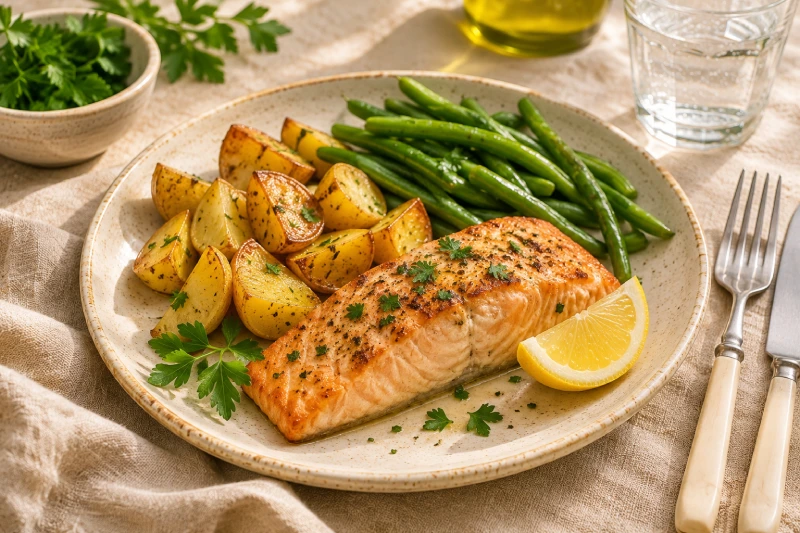
Try baked salmon with roasted potatoes and green beans.
Season the salmon with lemon, parsley and olive oil.
Serve it alongside potatoes and a suitable portion of steamed green beans.
It’s simple, nutritious and satisfying.
For more ideas, explore our low FODMAP meal plans and recipes to help make everyday cooking easier.
Easy Low FODMAP Snack Ideas
A few useful options include:
- Lactose-free yoghurt with strawberries
- Rice cakes with peanut butter
- Kiwifruit with a suitable portion of nuts
- A boiled egg
- Suitable dark chocolate
- A small homemade oat-based snack using low FODMAP ingredients
Remember that snacks are optional. Your appetite, daily routine and nutritional needs should guide how often you eat.
Common Mistakes When Choosing Low FODMAP Foods
Even with a useful food list, it’s easy to make the diet more restrictive than necessary.
Here are some common mistakes worth avoiding.
Assuming Low FODMAP Means Unlimited Portions
A green traffic light doesn’t necessarily mean you can eat unlimited amounts.
Some foods contain higher FODMAP levels when their serving size increases.
Check the tested quantities, especially for foods known to change classification with portion size.
Avoiding Every Food That Contains FODMAPs
The aim is not to eliminate all fermentable carbohydrates.
Many FODMAP-containing foods provide beneficial fibre and nutrients.
Some also act as prebiotics, helping nourish bacteria in the gut.
Avoiding them unnecessarily for long periods may reduce dietary variety.
Forgetting About Hidden Ingredients
Onion, garlic, inulin and certain sweeteners can appear in foods you might not expect.
Common examples include:
- Stock cubes
- Ready-made soups
- Salad dressings
- Marinades
- Seasoning blends
- Protein bars
- Sugar-free sweets
Learning to recognise these ingredients can be helpful during the restriction phase.
However, there’s no need to become anxious about every trace ingredient.
The quantity consumed and your individual tolerance still matter.
Not Eating Enough Fibre
Reducing wheat, legumes and certain fruits can unintentionally lower fibre intake.
This may be especially relevant if constipation is one of your main IBS symptoms.
Try to include suitable portions of oats, chia seeds, kiwifruit, quinoa, vegetables and other fibre-rich foods.
Increase fibre gradually and maintain adequate fluid intake.
Staying on a Strict Low FODMAP Diet for Too Long
The low FODMAP diet is designed to have three stages:
- Restriction: temporarily reducing high FODMAP foods, usually for approximately two to six weeks.
- Reintroduction: systematically testing FODMAP groups to identify personal triggers.
- Personalisation: returning to the widest possible diet while adjusting foods and quantities that consistently cause symptoms.
The initial restriction phase is not intended to become a permanent way of eating.
If symptoms don’t improve, it’s important to review the approach with a healthcare professional rather than continuing to eliminate more foods.
Can You Eat High FODMAP Foods Again?
In many cases, yes.
This is one of the most reassuring aspects of the low FODMAP diet.
Once your symptoms have improved during the initial phase, you can begin systematically reintroducing different FODMAP groups.
You may discover that you tolerate lactose perfectly well, that small amounts of wheat don’t bother you or that certain fruits only cause symptoms in larger portions.
Reintroduction helps you distinguish between foods you genuinely need to limit and foods you can enjoy without significant discomfort.
Monash University’s 2025 updates also changed some of the recommended foods used for specific FODMAP challenges.
For example, honey is no longer an ideal choice for testing fructose alone because updated testing identified significant fructan content alongside fructose.
This is why following an up-to-date reintroduction protocol matters.
Whenever possible, complete this stage with guidance from a FODMAP-trained dietitian.
The long-term goal is not to maintain the strictest possible diet.
It’s to enjoy the greatest possible variety of foods while keeping your symptoms manageable.
A Gentle Reminder: Your Low FODMAP Food List Is a Starting Point
Living with IBS can make food choices feel unpredictable.
You may find yourself checking ingredients repeatedly, avoiding restaurants or wondering whether a meal will leave you uncomfortable later.
But the low FODMAP diet should help you build confidence around food, not take that confidence away.
Use food lists as practical tools.
Learn which ingredients work well for you, experiment with suitable alternatives and remember that portion sizes can make a meaningful difference.
You don’t have to prepare perfect meals or follow every recommendation without flexibility.
And you certainly don’t need to avoid a food forever simply because it appears on a high FODMAP list.
Your digestive system is individual, and your long-term diet should reflect that.
If you’d like a little extra help, download our free Low FODMAP Food List and keep it nearby when planning meals or shopping.
For the most personalised guidance, work with a qualified dietitian experienced in IBS and the low FODMAP diet.
With the right information and support, it’s possible to make eating feel simpler, more varied and more enjoyable again.
Frequently Asked Questions About Low FODMAP Foods
What foods can I eat on a low FODMAP diet?
You can enjoy many vegetables, fruits, grains, proteins and dairy products. Examples include carrots, potatoes, kiwifruit, oranges, rice, quinoa, eggs, fish and lactose-free milk. The appropriate portion size matters for some foods, so check current tested servings.
What foods should I avoid on a low FODMAP diet?
During the initial restriction phase, foods commonly limited include onion, garlic, apples, pears, honey, cashews and certain wheat-based products. However, these foods aren’t necessarily unhealthy or permanently forbidden. Reintroduction helps you discover which ones you personally tolerate.
Are potatoes low FODMAP?
Yes. Plain white potatoes are naturally low in FODMAPs and can be a useful source of carbohydrates. Baking, boiling or roasting them are all suitable preparation methods. Just be mindful of sauces and seasonings containing onion or garlic.
Which fruits are low FODMAP?
Suitable fruits include kiwifruit, oranges, strawberries, pineapple and firm bananas in appropriate portions. Other fruits may also fit into the diet depending on their serving size, variety and ripeness.
Can I eat bread on a low FODMAP diet?
Yes. Certain gluten-free breads and traditionally fermented sourdough breads may be suitable in tested portions. However, not every gluten-free or sourdough product is automatically low FODMAP. Ingredients and preparation methods matter.
Are eggs low FODMAP?
Yes. Plain eggs naturally contain negligible FODMAP carbohydrates and provide high-quality protein. They’re a convenient option for breakfast, lunch or dinner. Just check any added sauces or seasonings.
Is peanut butter low FODMAP?
Plain peanut butter can be suitable in appropriate servings. Choose varieties without added high FODMAP ingredients such as honey or inulin, and check the recommended portion size.
Is cauliflower low FODMAP now?
Monash University’s 2025 retesting found that a standard serving of cauliflower was low FODMAP, while larger servings may contain relevant amounts of fructans. This is a good example of why updated serving-size information is more useful than an old list labelling a food simply as high or low FODMAP.
Can I eat rice and pasta on a low FODMAP diet?
Yes. Rice is naturally low FODMAP, and suitable gluten-free pasta can be a useful alternative to conventional wheat pasta. Some wheat pasta may also be tolerated in smaller portions or during personalisation.
Do I have to avoid high FODMAP foods forever?
Usually not. The strict restriction phase is temporary. Through structured reintroduction, many people discover they can tolerate certain FODMAP groups or enjoy previously restricted foods in smaller portions. The aim is a varied, nutritious diet that works for your individual digestive system.
Can a low FODMAP diet help with SIBO?
Can a low FODMAP diet help with SIBO?
A low FODMAP diet may help reduce bloating and other digestive symptoms in some people with small intestinal bacterial overgrowth (SIBO), particularly when symptoms overlap with IBS. However, it doesn’t eradicate bacterial overgrowth or replace appropriate medical assessment and treatment.
Where can I find a printable low FODMAP food list?
You can download our free Low FODMAP Food List, which includes foods commonly limited during the restriction phase and practical alternatives. Keep it on your phone or print it for easy reference when shopping and planning meals.