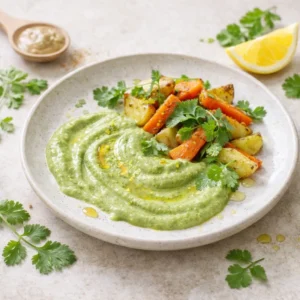
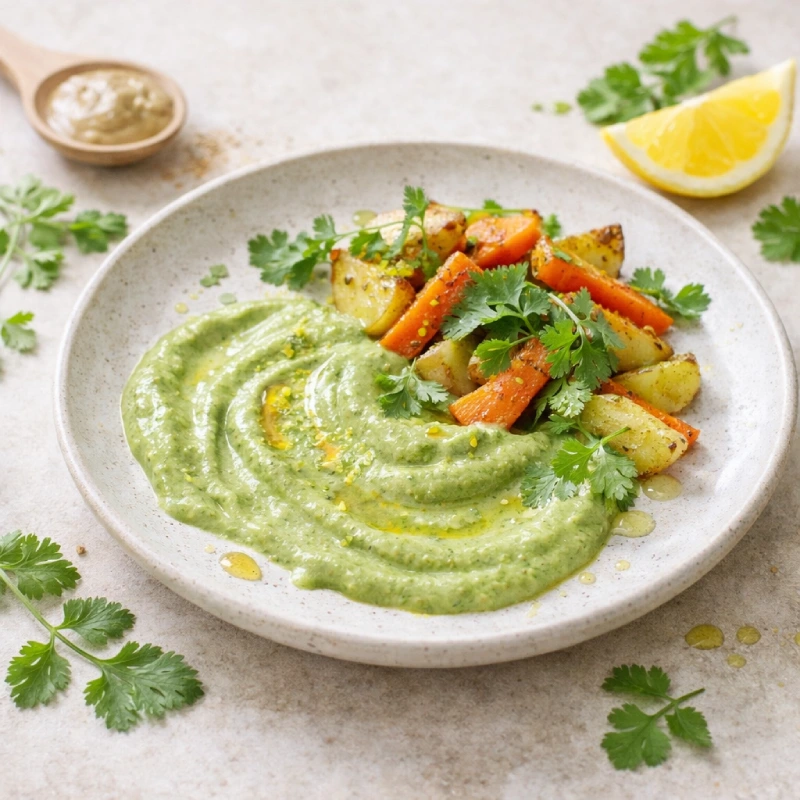
There’s something deeply comforting about a sauce that feels both fresh and nourishing at the same time. This Low FODMAP Green Tahini Sauce is exactly that: a gentle, vibrant blend of herbs, tahini, and lemon that adds life to even the simplest meals.
If you’ve been navigating IBS or SIBO, you’ll know that sauces can sometimes feel like a hidden source of symptoms. Garlic, in particular, is often the culprit. That’s why this version has been thoughtfully adapted, so you can enjoy all the flavour, without the worry.
It’s smooth, slightly earthy, with a bright citrus lift… and most importantly, it’s designed to feel safe.
Table of Contents
A Simple Sauce That Feels Good in Your Body
At its heart, this sauce is made with just a handful of real ingredients:
- Fresh coriander (cilantro)
- Tahini
- Lemon juice
- Extra-virgin olive oil
- Ground cumin
- Salt and black pepper
Traditionally, garlic would also be included, but here, we gently leave it out.
And interestingly, you may find you don’t miss it at all. The combination of herbs, sesame, and lemon already creates a beautifully rounded flavour.
That said, if you’re craving something closer to the original version, you can always use garlic-infused olive oil. It gives you that familiar aroma without the FODMAPs, since fructans from garlic are not oil-soluble.
👉 Low FODMAP Garlic Infused Olive Oil Recipe
Understanding the Ingredients (Low FODMAP Check)
Rather than seeing ingredients as “good” or “bad”, it helps to understand how they behave in your body. This is where confidence starts to grow.
Fresh coriander is wonderfully low FODMAP and usually very well tolerated. It brings freshness without adding digestive load.
Lemon juice and olive oil are also completely safe; simple, clean ingredients that support digestion rather than challenge it.
Tahini, however, is the one to pay gentle attention to.
According to Monash University, tahini (made from sesame seeds) is low FODMAP in moderate portions, but larger amounts can contribute to excess FODMAP intake.
This doesn’t mean you need to avoid it; it simply means we respect the portion.
The Right Portion Makes All the Difference
This is where everything comes together in a calm, practical way.
👉 A safe serving size for this sauce is 2 tablespoons (around 30 g) per meal.
This amount keeps the tahini within a range that is generally well tolerated, while still allowing you to enjoy the flavour and texture fully.
The recipe yields about 4 servings, which makes it easy to portion naturally.
And if your digestion has been feeling a little sensitive lately, you can always start with 1 tablespoon and see how your body responds. There’s no pressure, just gentle exploration.
Ingredients
- 1 cup fresh cilantro (coriander leaves & tender stems) – ~30 g
- 1/3 cup tahini – ~80 g
- 2 Tbsp fresh lemon juice – ~30 g
- 2 Tbsp extra-virgin olive oil (or garlic-infused oil) – ~27 g
- 1 tsp ground cumin – ~2 g
- 1/2 tsp kosher salt – ~3 g
- 1/4 tsp black pepper – ~0.5 g
How to Prepare It
This is one of those recipes that fits quietly into your day without demanding much from you.
Simply add all the ingredients into a blender or food processor and blend until smooth. You’ll notice the texture becoming creamy and slightly fluffy as the tahini emulsifies with the lemon juice and olive oil.
If it feels a little thick, just add a splash of water until it reaches your desired consistency. Some people prefer it as a drizzle, others as a dip; both work beautifully.
Letting it rest for a few minutes before serving helps the flavours settle, but it’s just as lovely straight away.
Nutritional Overview (Macros)
Having a gentle idea of the nutritional profile can help you feel more grounded in your choices.
For the full recipe, approximately:
- Calories: ~600 kcal
- Fat: ~52 g
- Carbohydrates: ~18 g
- Protein: ~12 g
Per serving (2 tablespoons):
- Calories: ~150 kcal
- Fat: ~13 g
- Carbohydrates: ~4.5 g
- Protein: ~3 g
This sauce is rich in healthy fats from tahini and olive oil, which can help with satiety and make meals feel more satisfying without needing large portions.
Why This Sauce Works for IBS
When you’re dealing with digestive symptoms, simplicity often brings the most relief.
This recipe works well because it:
- Avoids garlic completely
- Keeps FODMAP intake moderate and controlled
- Uses whole, minimally processed ingredients
- Balances richness with freshness
It’s not heavy, not overwhelming; just quietly supportive.
How to Enjoy It
This green tahini sauce has a way of making simple meals feel complete.
You might drizzle it over roasted vegetables, spoon it onto grilled chicken or fish, or add it to a rice or quinoa bowl. It also works beautifully as a dip for low FODMAP crackers or as a dressing for salads.
Sometimes, having a reliable sauce like this in the fridge can make eating feel easier, especially on days when your energy or digestion feels a little fragile.
Storage Tips
Keep it in an airtight container in the fridge, where it will stay fresh for about 4 days.
You may notice it thickens slightly as it chills; just stir in a little water before serving to bring it back to life.
A Gentle Note on Personal Tolerance 🌿
Even when something is considered low FODMAP, your personal experience matters most.
The goal is not perfection; it’s understanding.
Start with the recommended portion, observe how you feel, and adjust gently if needed. Over time, this builds trust between you and your body, which is far more valuable than any strict rule.
FAQ: Low FODMAP Green Tahini Sauce
Is tahini low FODMAP?
Yes, tahini is low FODMAP in moderate portions. Larger servings may become problematic, so it’s best to stick to recommended amounts.
Why remove garlic from the recipe?
Garlic contains fructans, which are a common trigger for IBS symptoms. Removing it makes the sauce much gentler on digestion.
Can I still get a garlicky flavour?
Yes, you can use garlic-infused olive oil to recreate that flavour safely, since it doesn’t contain the FODMAPs found in whole garlic.
How much of this sauce can I safely eat?
A serving of about 2 tablespoons per meal is considered low FODMAP and well tolerated for most people.
Is this suitable during the elimination phase?
Yes, this recipe is designed to be safe during the elimination phase when consumed in the recommended portion.
What if my sauce is too thick?
That’s completely normal. Just add a little water and stir or blend again until you reach your preferred consistency.