Table of Contents
Introduction: The Science Behind This Menu Plan
If you’re navigating the low FODMAP diet for IBS, SIBO, or chronic bloating, structure is everything. This scientifically designed low FODMAP diet menu plan helps you eat safely and nutritiously during the elimination phase, while keeping meals enjoyable and easy to prepare.
This plan follows:
- The Monash University Low FODMAP guidelines (2025 updates); the global scientific reference for FODMAP portion sizes and tolerances.
- The Harvard Healthy Eating Plate model; a visual framework ensuring nutritional balance and variety.
- Daily targets of approximately 2000 kcal, 90 g protein, and 30 g fibre, tailored to support satiety, muscle maintenance, and digestive health.
Each day includes four meals: breakfast, lunch, snack, and dinner, with safe FODMAP limits (grams) included for any ingredient that could become problematic in larger portions. Protein sources rotate across the week — poultry, fish, eggs, tofu, and legumes — following evidence-based frequency recommendations for optimal gut and metabolic health.
All recipes are designed to be simple, quick, and kind on your gut.
The Harvard Plate & FODMAP Harmony
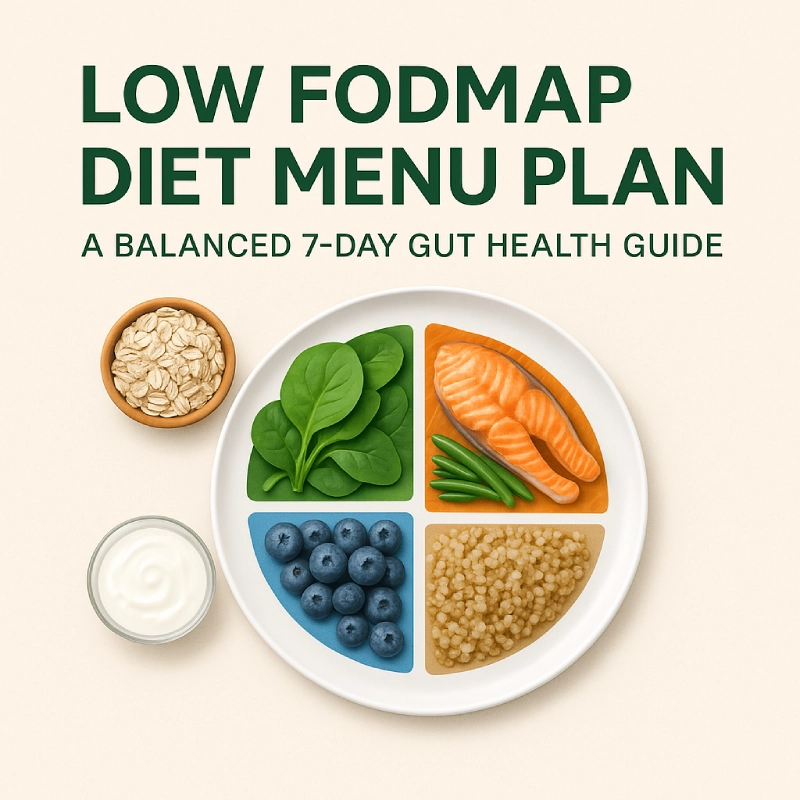
The Harvard Healthy Eating Plate divides your meal into:
- ½ plate: Vegetables and fruits (using only low FODMAP options)
- ¼ plate: Whole grains or starchy carbohydrates
- ¼ plate: Protein (animal or plant-based)
- Plus healthy fats (olive oil, nuts, seeds)
This structure blends perfectly with the low FODMAP elimination phase. By keeping each plate balanced, you reduce FODMAP load naturally while supporting overall health; energy balance, hormone function, and nutrient adequacy.
For those with IBS or SIBO, this plan helps stabilise digestion, minimise bloating, and maintain dietary variety during a restrictive period. Every ingredient is evidence-checked against Monash University’s 2025 FODMAP data.
A Note on Portions
You’ll notice that some ingredients in the plan include amounts in brackets (for example, carrot ≤75 g or blueberries ≤40 g). These represent the maximum recommended low FODMAP serving sizes according to Monash University’s 2025 food update, which remains the international reference for FODMAP testing.
Staying within these amounts helps ensure that each meal remains safe for the elimination phase, reducing the risk of FODMAP overload while still providing enough nutrients for a healthy, balanced diet.
7-Day Low FODMAP Diet Menu Plan
Each day provides approximately 2000 kcal, with high-quality protein (~90 g) and around 30 g fibre.
All meals are quick to prepare and designed to be realistic for daily life.
Day 1; Gentle Start
Breakfast (Prep 5 min / Cook 0 min):
Overnight oats made with rolled oats (≤52 g), lactose-free milk, chia seeds (≤20 g), and blueberries (≤40 g).
Fibre-rich, soothing start to your day.
Lunch (Prep 10 min / Cook 15 min):
Grilled chicken breast, quinoa, baby spinach (≤75 g), cucumber, and grated carrot with olive oil and lemon dressing.
High-protein and light on the gut.
Snack (Prep 2 min):
Lactose-free Greek yoghurt with kiwi (≤100 g).
Dinner (Prep 10 min / Cook 25 min):
Oven-baked salmon fillet with roasted sweet potato (≤75 g) and steamed green beans.
Omega-3s for inflammation control.
Day 2; Colour and Energy
Breakfast (Prep 5 min / Cook 10 min):
Scrambled eggs with baby spinach (≤75 g) on sourdough spelt toast (1 slice, ~35 g).
Lunch (Prep 10 min / Cook 0 min):
Tuna and rice salad with rocket, grated courgette (≤75 g), and tomato (≤65 g).
Snack (Prep 1 min):
A small orange (≤130 g) and a handful of walnuts (≤20 g).
Dinner (Prep 15 min / Cook 20 min):
Lemon and herb tofu stir-fry with bok choy, red pepper, carrots (≤75 g), and tamari, served over brown rice.
Plant-based proteins with fibre and antioxidants.
Day 3; Comfort and Warmth
Breakfast (Prep 5 min / Cook 5 min):
Porridge with lactose-free milk, strawberries (≤65 g), and pumpkin seeds (≤20 g).
Lunch (Prep 10 min / Cook 15 min):
Turkey lettuce wraps with grated carrot, courgette (≤75 g), and sesame oil.
Snack (Prep 1 min):
Rice cakes topped with peanut butter (≤2 tbsp).
Dinner (Prep 10 min / Cook 25 min):
Grilled cod with creamy polenta and roasted carrots (≤75 g).
Comforting, gluten-free dinner option.
Day 4; Fibre Focus
Breakfast (Prep 5 min / Cook 0 min):
Smoothie bowl with spinach (≤75 g), kiwi (≤100 g), lactose-free yoghurt, chia (≤20 g), and oats (≤52 g).
Lunch (Prep 10 min / Cook 5 min):
Canned lentils (rinsed, ≤75 g drained), cherry tomatoes (≤65 g), cucumber, baby spinach, and feta (lactose-free).
Snack (Prep 2 min):
Air-popped popcorn (3 cups) and herbal tea.
Dinner (Prep 15 min / Cook 20 min):
Chicken stir-fry with rice noodles, bean sprouts (≤75 g), and red pepper in garlic-infused oil.
High protein and easy to digest.
Day 5; Omega-3 Boost
Breakfast (Prep 5 min / Cook 5 min):
Two poached eggs on sourdough toast with sliced tomato (≤65 g) and olive oil.
Lunch (Prep 10 min / Cook 0 min):
Sardine salad with quinoa, grated carrot (≤75 g), cucumber, and baby spinach (≤75 g).
Snack (Prep 2 min):
Lactose-free yoghurt with banana (firm, ≤100 g).
Dinner (Prep 15 min / Cook 45 min):
Beef and vegetable stew with carrots (≤75 g), parsnip, and courgette (≤75 g), served with mashed potato.
Hearty but gut-friendly.
Day 6; Plant Variety
Breakfast (Prep 5 min / Cook 0 min):
Chia pudding (≤20 g chia) soaked in lactose-free milk, topped with raspberries (≤60 g) and coconut flakes.
Lunch (Prep 10 min / Cook 15 min):
Grilled chicken with gluten-free couscous (≤100 g cooked) and roasted courgette (≤75 g).
Snack (Prep 1 min):
Handful of almonds (≤10 nuts, ~12 g).
Dinner (Prep 10 min / Cook 25 min):
Baked trout with mashed potato and carrot (≤75 g each).
Day 7; Simple and Nourishing
Breakfast (Prep 10 min / Cook 10 min):
Oat pancakes (≤52 g oats) with maple syrup and blueberries (≤40 g).
Lunch (Prep 10 min / Cook 10 min):
Tofu rice bowl with broccoli (≤75 g), courgette (≤75 g), and sesame oil.
Snack (Prep 2 min):
Rice cakes with lactose-free cheese.
Dinner (Prep 15 min / Cook 35 min):
Roast chicken thigh with quinoa salad (spinach ≤75 g, cucumber, olive oil, lemon juice).
Practical Tips for Success
- Hydration: Aim for 1.5 to 2 litres of water daily; herbal teas like peppermint or rooibos are soothing.
- Flavouring: Use garlic-infused oil or green tops of spring onions instead of onion or garlic.
- Cooking oils: Olive and sesame oil are excellent for low-FODMAP cooking.
- Fibre sources: Rely on chia, oats, quinoa, courgette, and carrots to reach your 30 g/day target.
- Protein rotation: Vary your proteins; fish, tofu or legumes, poultry, seafood…
- Mindful eating: Eat slowly, chew well, and avoid skipping meals to help stabilise gut motility.
Why This Plan Works
This low FODMAP diet menu plan meets the elimination phase’s strict requirements while preventing nutritional gaps. By combining the Monash University guidelines with Harvard’s balanced plate model, it ensures:
- Optimal macronutrient balance for energy and satiety
- Adequate fibre for bowel regularity without triggering symptoms
- Consistent, evidence-based symptom management
Every ingredient and portion was chosen with care, to nourish your gut gently while teaching you how to build balanced, enjoyable low FODMAP meals.
FAQ about a Low FODMAP Diet Menu Plan
How long should I stay in the elimination phase?
Typically 2–6 weeks, until symptoms stabilise. Then, reintroduce foods one by one with guidance from a FODMAP-trained dietitian.
Can I drink coffee or tea?
Yes; coffee and black or green tea are low FODMAP in moderate amounts according to Monash University. However, caffeine can stimulate the bowel, so if you’re prone to diarrhoea or sensitivity, it’s best to limit coffee or choose a decaffeinated option. Use lactose-free or plant-based milk alternatives such as almond, oat (low-FODMAP portion), or soy made from soy protein, not whole soybeans.
Are oats and quinoa safe during elimination?
Yes. Both are low FODMAP and excellent fibre sources within recommended portions.
Can I include legumes?
Yes, but choose canned, rinsed varieties (like lentils ≤75 g drained) to minimise GOS content.
What’s the best way to season meals?
Use herbs, citrus juice, ginger, and garlic-infused oils for flavour without FODMAP triggers. Avoid onion and garlic powders, and any mixes that could include them.
Will I get enough nutrients on this plan?
Yes, the menu ensures balanced protein, fibre, and micronutrients. The Harvard Plate framework safeguards variety and adequacy.
Written by Ana Diaz, Dietitian, specialised in gastrointestinal health and the Low FODMAP Diet. Passionate about evidence-based nutrition and gentle support for IBS, SIBO, and functional gut disorders.