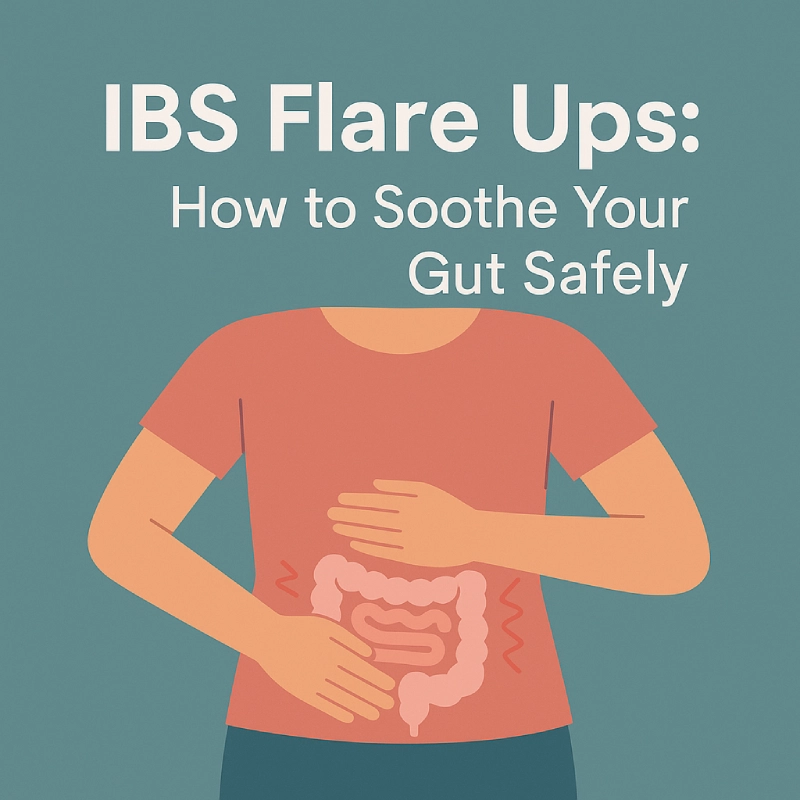
An ibs flare up can be unsettling. One day, your digestive system feels reasonably stable; the next, your belly is bloated, crampy or painfully sensitive. For many people living with Irritable Bowel Syndrome (IBS), these flare ups can feel unpredictable, frustrating, and at times even overwhelming.
As a nutrition professional, I want to reassure you: IBS flare ups are common, manageable, and often respond beautifully to gentle adjustments. And while the Low FODMAP Diet can be a useful tool, it is not a long-term diet and should never be approached alone. More on that in a moment.
First, let’s understand what’s happening in your gut.
Table of Contents
What Exactly Is an IBS Flare Up?
IBS is a functional gastrointestinal disorder, meaning the gut is structurally healthy, but the way it functions can be unusually sensitive. During an ibs flare up, symptoms intensify, often including:
- abdominal pain or cramping
- bloating and distension
- excessive gas
- diarrhoea, constipation, or alternating between both
- nausea or early fullness
- fatigue and general discomfort
These episodes vary from person to person, but the pattern is familiar: a trigger happens (food, stress, hormones, irregular eating, travel, illness), and the gut reacts disproportionately.
Understanding triggers is key, and one of the tools that can help identify them is the Low FODMAP Diet, originally developed by Monash University.
However, before we go further:
The Low FODMAP Diet is not a forever diet.
It must be followed only for a short time.
And it must be guided by a trained dietitian to avoid harm.
We’ll explore why in detail further below.
Why Do IBS Flare Ups Happen?
1. Food Triggers (including FODMAPs)
High-FODMAP foods are a well-studied trigger for many with IBS. According to Monash University, these carbohydrates can cause symptoms because they:
- draw water into the small intestine
- ferment quickly in the large intestine
- create gas and distension
- irritate an already sensitive gut
This process doesn’t harm the gut, but it can feel very uncomfortable.
Different people react to different FODMAP groups. One person may react strongly to lactose; another may tolerate dairy beautifully but struggle with fructans. There is no universal IBS trigger, only personal ones.
This is why the reintroduction phase of the Low FODMAP Diet is essential. The Monash 2025 update shows that some foods previously thought to be high-FODMAP were reclassified, highlighting how dynamic and evolving this research is . A professional can help you personalise your plan safely.
2. Stress and the Gut-Brain Axis
The gut and brain communicate constantly. Stress, anxiety, and emotional strain can amplify gut sensitivity and motility. During stressful periods, even small triggers can feel like big ones.
3. Hormonal changes
Many women notice symptom fluctuations across the menstrual cycle, especially around ovulation and menstruation; a completely normal pattern.
4. Irregular eating or disrupted routines
Skipping meals, eating very large meals, eating too quickly, travelling, jet lag; all may trigger an ibs flare up.
What to Do During an IBS Flare Up
When symptoms spike, the goal is comfort + calm + simplicity. Here’s a gentle, evidence-informed approach.
Step 1: Return to a Gentle, Simple Eating Pattern
This does not mean going back to a strict Low FODMAP Diet unless your dietitian has specifically advised it. Instead, during a flare up:
- choose small, frequent meals
- eat slowly and mindfully
- prioritise soothing, low-irritant foods
- avoid very fatty, spicy, fried or large meals
- reduce caffeine, alcohol, and carbonated drinks temporarily
Many people find comfort in:
- plain rice, polenta, or small potatoes
- eggs, chicken, tofu, or white fish
- zucchini, carrots, green beans, or lettuce
- oats (if they’re well tolerated individually)
This “gut rest” approach helps reduce mechanical and chemical stress on your bowel.
Step 2: Hydration & Heat
- Sip water, herbal teas, or electrolyte drinks if diarrhoea is present.
- Use a warm compress or heating pad on the abdomen to relax cramping.
Step 3: Gentle Movement
Light walking, stretching, yoga, or slow breathing exercises can ease gas and help restore motility.
Step 4: Rest & Nervous System Calm
If stress contributed to your symptoms, dedicated calming time is not a luxury, it’s treatment.
Gentle breathing, meditation, journaling, or simply lying quietly with warmth can help reduce visceral sensitivity.
The Low FODMAP Diet: Helpful, Powerful… But Not Forever
This is the section most people misunderstand, and the one where I want to hold your hand gently and be very clear.
The Low FODMAP Diet is a short-term, diagnostic tool, not a long-term lifestyle.
It was designed by Monash University researchers to help identify personal food triggers, not to eliminate foods indefinitely.
Why it must not be followed long-term
🔸 It is highly restrictive
You remove dozens of nutritious foods: entire categories of fruits, vegetables, grains, legumes and dairy.
🔸 Long-term restrictions can cause nutrient deficiencies
People who stay in the elimination phase too long often develop low intake of:
- fibre
- calcium
- B vitamins
- antioxidants
- prebiotics (which feed healthy gut bacteria)
🔸 It can worsen gut microbiome diversity
Monash University emphasises that the strict phase should last no longer than 2–6 weeks because reduced intake of fermentable fibres may negatively impact gut bacteria.
🔸 It can increase anxiety around food
Long-term strict avoidance can trigger fear-based eating or disordered patterns, especially in people already anxious about symptoms.
🔸 It can contribute to eating disorders like ARFID
Avoidant Restrictive Food Intake Disorder (ARFID) can arise when fear of symptoms leads to extreme food restriction. This is a recognised risk when restrictive diets are followed without guidance.
Professional supervision is essential
A trained dietitian ensures that you:
- stay in the strict phase only for the recommended short time
- reintroduce foods correctly (the most important step!)
- maintain a nutritionally balanced, varied diet
- avoid unnecessary long-term restrictions
- protect your mental relationship with food
- interpret Monash app updates safely (e.g., the 2025 changes)
This support is not optional, it is medically important.
How to Prevent Future IBS Flare Ups (Safely)
1. Move toward a personalised, liberalised diet, not lifelong restriction
The goal of the Low FODMAP process is not to “eat low FODMAP forever.”
It is to map your personal tolerances so you can enjoy as many foods as possible without triggering symptoms.
A dietitian-led plan ensures you build a long-term pattern that is:
- nutritionally complete
- diverse and gut-friendly
- enjoyable
- socially sustainable
- not fear-based
2. Build gentle daily eating habits
These everyday practices reduce flare-ups more effectively than restriction alone:
- eat at regular times
- keep meals moderate in size
- avoid rushing or skipping meals
- stay hydrated
- balance fibre intake
- include gut-soothing herbal teas (peppermint, ginger, fennel) if tolerated
- limit caffeine and alcohol if they worsen your symptoms
3. Support stress regulation
A calmer nervous system equals a calmer gut.
Practices that help include:
- slow breathing
- meditation or mindfulness
- yoga or gentle stretching
- daily walking
- journaling
- hobbies that relax you
Small habits practiced daily can dramatically reduce the intensity of an ibs flare up.
4. Sleep matters more than you realise
Poor sleep increases visceral hypersensitivity, meaning you feel discomfort more intensely.
Aim for consistent sleep and calming routines before bed.
When IBS Symptoms May Not Be “Just IBS”
Even if you’re familiar with flare ups, certain symptoms require medical assessment:
- blood in stool
- unintentional weight loss
- persistent diarrhoea
- pain that wakes you at night
- fever
- family history of IBD, coeliac disease, or bowel cancer
If something feels “different,” trust that instinct and speak to a doctor.
Final Words: You Deserve a Calm, Comfortable Gut
Living with IBS can feel exhausting at times, especially when a flare up appears uninvited. But you are not alone, and you are not powerless. With the right tools, knowledge, and support, most people experience significant relief and regain control of their daily routines.
And remember, from the bottom of my heart:
💛 You do not need to suffer through flare ups alone.
💛 You do not need to stay stuck in restrictive eating.
💛 You deserve a plan that nourishes your body and supports your wellbeing.
If you’d like, I can create:
✨ a gentle flare-up meal plan
✨ a personalised Low FODMAP reintroduction guide (based on the 2025 updates)
✨ or a symptom-tracking template to identify your triggers
Just let me know; I’m here for you.
FAQ IBS Flare Ups & the Low FODMAP Diet
Is the Low FODMAP Diet safe to follow long-term?
No. The strict phase is intended for only 2–6 weeks. Long-term restriction can lead to nutrient deficiencies, microbiome changes, and disordered eating patterns. Always follow this diet with a trained professional.
Can a Low FODMAP Diet stop an ibs flare up?
It may help reduce symptoms temporarily, but it should not be used repeatedly or indefinitely. It is a diagnostic tool, not a lifestyle.
How can I calm an IBS flare up quickly?
Eat simple, gentle foods; stay hydrated; use heat on your abdomen; practise slow breathing; and rest your digestive system with small, frequent meals.
Why do flare ups happen even when I’m careful?
Stress, hormones, illness, poor sleep, irregular eating, and changes in gut motility can all trigger flare ups, even without dietary triggers.
What if I’m afraid to reintroduce foods?
This is very common. A dietitian can guide you safely through reintroductions and help rebuild a flexible, nourishing diet without fear.
Can the Low FODMAP Diet cause nutrient deficiencies?
Yes, if followed too long or incorrectly. This is why dietitian supervision is crucial.