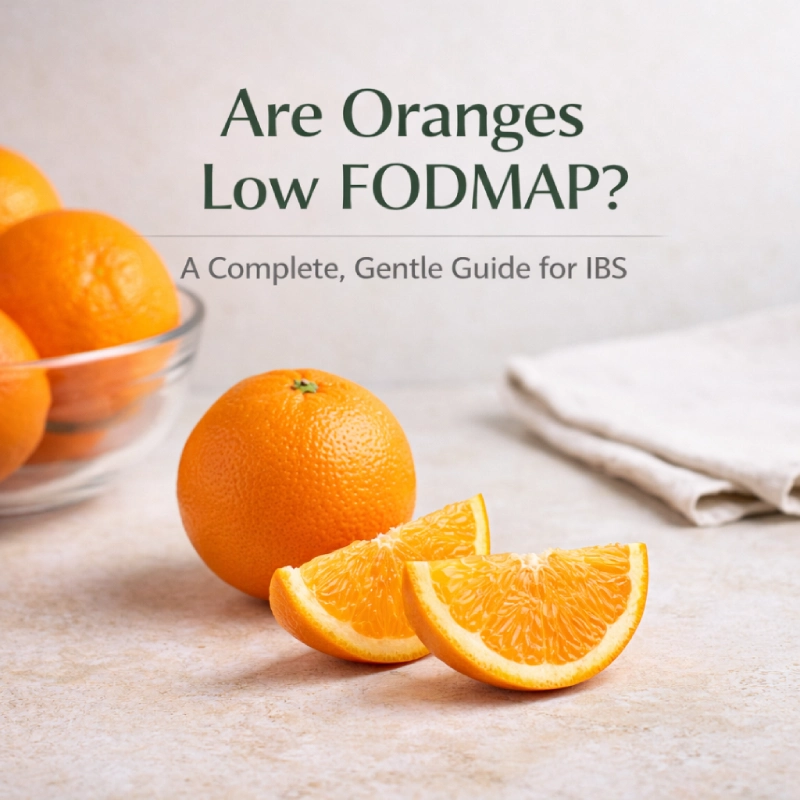
If you’ve been asking yourself “are oranges low FODMAP?”, you’re already taking an important step towards understanding your digestive health. And the good news (truly reassuring news) is that oranges are one of the fruits that can usually stay on your plate, even during the stricter phases of the low FODMAP diet.
Let’s walk through this together, calmly and clearly, so you can enjoy your food without unnecessary worry.
Table of Contents
Understanding FODMAPs (A Quick Refresher)
Before we dive into oranges specifically, let’s briefly revisit what FODMAPs are.
FODMAPs are types of carbohydrates that can be poorly absorbed in the gut, especially in people with IBS. They include:
- Fructose (in excess of glucose)
- Lactose
- Fructans
- Galacto-oligosaccharides (GOS)
- Polyols (like sorbitol and mannitol)
When these reach the large intestine, they ferment and may cause:
- Bloating
- Gas
- Abdominal discomfort
- Changes in bowel habits
The low FODMAP diet, developed by Monash University, helps identify which of these trigger your symptoms.
So, Are Oranges Low FODMAP?
The short answer: Yes, oranges are low FODMAP
Oranges are considered low FODMAP in standard serving sizes, making them a safe and nourishing choice for most people with IBS.
Why are oranges well tolerated?
Unlike fruits such as watermelon or mango, oranges have a balanced ratio of fructose to glucose. This balance allows your body to absorb the sugars more efficiently, reducing the likelihood of fermentation and symptoms.
What Portion of Oranges Is Low FODMAP?
Portion size always matters on the low FODMAP diet, but here’s the comforting part:
👉 A medium orange (around 130g) is generally considered low FODMAP.
This means you can:
- Enjoy a whole orange as a snack
- Add segments to salads
- Include it in breakfast bowls
Without worrying about triggering symptoms, at least for most people.
What About Orange Juice?
This is where things get a little more nuanced.
Fresh orange juice
- Low FODMAP in small servings (around 125 ml)
- Larger portions may increase fructose load
Why portion matters more with juice
Juicing removes fibre and concentrates sugars, meaning:
- You consume more fruit in one go
- Absorption becomes more difficult
- Symptoms may appear more easily
Interestingly, updated reintroduction guidance highlights fresh orange juice as a suitable fructose challenge food , precisely because of its controlled fructose content.
Nutritional Benefits of Oranges for IBS
Oranges are not only low FODMAP; they’re genuinely supportive of overall gut health.
Rich in Vitamin C
Supports immune function and helps reduce inflammation.
Hydrating
Oranges have a high water content, which can support digestion.
Gentle Fibre Content
Provides fibre without being overly fermentable.
Naturally Sweet Without Excess Fructose
A rare and valuable combination for those with IBS.
Are All Types of Oranges Low FODMAP?
Most common orange varieties are low FODMAP when eaten in appropriate portions, including:
- Navel oranges
- Valencia oranges
- Clementines (in moderate amounts)
- Mandarins
A note on mandarins and clementines
These are also low FODMAP, but portion size matters slightly more:
- 1–2 small fruits are usually well tolerated
Oranges vs Other Fruits: A Helpful Comparison
Let’s gently compare oranges with other fruits you might be considering:
Low FODMAP Fruits (like oranges)
- Oranges
- Strawberries
- Kiwi
- Pineapple
High FODMAP Fruits
- Watermelon (excess fructose)
- Mango (high fructose)
- Apples (fructose + sorbitol)
- Cherries (sorbitol)
👉 Oranges sit comfortably in the “safe” category, which is why they’re often recommended early in the diet.
Can Oranges Still Trigger Symptoms?
Even though oranges are low FODMAP, some people may still experience symptoms. And that’s okay—this is where we listen to your body.
Possible reasons include:
1. Individual sensitivity
IBS is highly personal. What works for one person may not work for another.
2. Acidic nature
Oranges are acidic, which can sometimes:
- Irritate sensitive stomachs
- Worsen reflux symptoms
3. Quantity
Eating multiple oranges in one sitting may:
- Increase sugar load
- Overwhelm digestion
When to Eat Oranges on a Low FODMAP Diet
During elimination phase
✔️ Yes, you can include oranges
✔️ Stick to one medium orange per serving
During reintroduction phase
✔️ Still safe
✔️ Useful as a “baseline fruit” while testing other foods
During personalisation phase
✔️ Continue if well tolerated
✔️ Adjust portions based on your comfort
Practical Ways to Enjoy Oranges (Without Symptoms)
Here are some gentle, realistic ideas:
Breakfast
- Orange segments with lactose-free yoghurt
- Added to oats or chia pudding
Lunch
- Orange slices in salads with spinach and walnuts
Snacks
- Fresh orange with a handful of low FODMAP nuts
Tip:
Pair oranges with protein or fat to slow digestion and improve tolerance.
Common Mistakes to Avoid
Drinking too much orange juice
Stick to small servings to avoid excess fructose intake.
Assuming “natural” means unlimited
Even low FODMAP foods can cause symptoms in large amounts.
Ignoring your own body signals
Your experience matters more than any list.
Oranges and the Reintroduction Phase
One of the most interesting updates in FODMAP research is how foods are selected for reintroduction.
According to recent guidance :
- Fresh orange juice is used as a fructose challenge food
- It provides a controlled way to test tolerance
This reinforces something important:
👉 Oranges themselves are generally safe, but their juice can help identify limits.
Emotional Side of Food: Let’s Talk About It
If you’ve been struggling with IBS, food can start to feel complicated… even scary.
So let’s pause for a moment.
Oranges are one of those foods that can bring back a sense of normality:
- Something fresh
- Something simple
- Something safe
And that matters more than it might seem.
Conclusion
So, are oranges low FODMAP?
👉 Yes, they are, and they can be a wonderful, safe addition to your diet when eaten in appropriate portions.
They offer:
- Nutritional benefits
- Digestive friendliness
- Flexibility across all phases of the diet
And perhaps most importantly, they remind you that eating with IBS doesn’t have to feel restrictive or joyless.
FAQ: Are Oranges Low FODMAP?
Can I eat oranges every day on a low FODMAP diet?
Yes, as long as you stick to a moderate portion (typically one medium orange), most people tolerate them very well.
How many oranges can I eat at once?
One medium orange is considered safe. Eating multiple oranges in one sitting may increase the risk of symptoms.
Is orange juice low FODMAP?
Yes, but only in small servings (around 125 ml). Larger amounts may contain too much fructose.
Are mandarins and clementines low FODMAP?
Yes, they are. Usually 1–2 small fruits are well tolerated.
Why do oranges sometimes cause discomfort?
This may be due to acidity, portion size, or individual sensitivity rather than FODMAP content.
Are oranges better than apples for IBS?
Generally, yes. Apples are high in FODMAPs, while oranges are low FODMAP and easier to digest for most people.