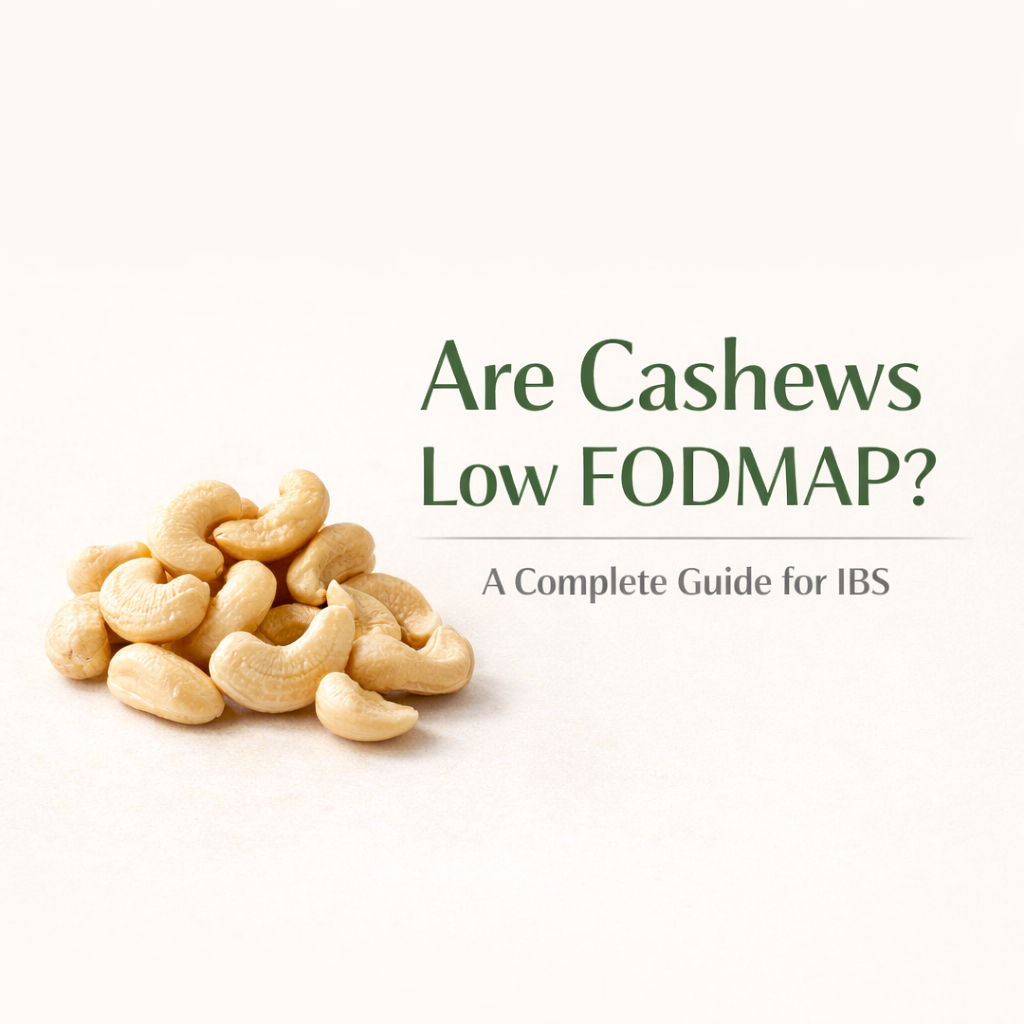
If you’re asking yourself “are cashews low FODMAP?”, you’re already taking a thoughtful step towards understanding your gut health. Cashews are nutritious, creamy, and widely used, but when it comes to IBS and the low FODMAP diet, they can be a bit tricky.
Let’s explore this together in a calm, clear, and evidence-based way, so you can make decisions with confidence, not confusion.
Table of Contents
Are Cashews Low FODMAP?
The simple answer is:
👉 No, cashews are not low FODMAP in standard serving sizes.
According to Monash University:
- Cashews are high in GOS (galacto-oligosaccharides)
- They also contain fructans
- Their classification remains unchanged in the 2025 update
This means that for most people with IBS, cashews are likely to trigger digestive symptoms, especially when eaten in typical portions.
Why Are Cashews High FODMAP?
Understanding GOS and Fructans
Cashews contain two types of FODMAPs:
1. GOS (Galacto-oligosaccharides)
- Found in legumes and some nuts
- Poorly absorbed in the small intestine
- Fermented by gut bacteria
2. Fructans
- Chains of fructose molecules
- Also found in wheat, onion, and garlic
Both can lead to:
- Bloating
- Gas
- Abdominal discomfort
- Changes in bowel habits
💡 When a food contains multiple FODMAP types, like cashews, it can be even more difficult for sensitive guts to tolerate.
Can You Eat Cashews on a Low FODMAP Diet?
During the Elimination Phase
During this phase:
👉 It’s best to avoid cashews completely.
This helps reduce symptoms and gives your gut time to settle.
During the Reintroduction Phase
Here’s where things become more personalised.
Cashews are sometimes used to test tolerance to:
- GOS
- Fructans (in part)
However, because they contain more than one FODMAP group, they are not always the ideal reintroduction food.
From the latest updates:
- Cashews remain high FODMAP
- No change in their classification
👉 A dietitian may suggest testing other foods first to isolate specific triggers more clearly.
During the Personalisation Phase
Once you understand your tolerance:
- Some people may handle very small quantities
- Others may need to avoid them entirely
And that’s perfectly okay. Your goal is not restriction; it’s comfort and balance.
How Many Cashews Are Too Many?
This is where many people get caught out.
👉 Even small portions of cashews can be high FODMAP.
Unlike some foods, there isn’t a clearly “safe” low FODMAP serving that works for most people.
Why?
- GOS accumulates quickly
- Cashews are dense and easy to overeat
💡 A handful (which seems small) is usually well above tolerance for IBS sufferers.
Symptoms You Might Experience After Eating Cashews
If cashews don’t suit your gut, you might notice:
- Bloating or abdominal swelling
- Gas and discomfort
- Stomach cramps
- Diarrhoea or urgency
Symptoms can appear:
- Within a few hours
- Or the following day
💛 Gentle reminder: this isn’t failure; it’s information your body is sharing with you.
Are Cashew Butter and Cashew Milk Low FODMAP?
Cashew Butter
👉 Not low FODMAP
- Made from concentrated cashews
- Even small amounts can trigger symptoms
Cashew Milk
This one depends:
- Commercial cashew milk (diluted) → sometimes tolerated in small amounts
- Homemade cashew milk → usually high FODMAP
💡 Always check ingredients and portion size carefully.
Low FODMAP Alternatives to Cashews
The good news? You have plenty of safe and delicious options.
🌰 Low FODMAP Nuts
- Almonds (small portions)
- Walnuts
- Macadamia nuts
- Pecans
- Brazil nuts
👉 These are generally better tolerated when eaten in appropriate serving sizes.
🥜 Seed Alternatives
- Pumpkin seeds
- Sunflower seeds
- Chia seeds
These are:
- Nut-free
- Low FODMAP
- Nutrient-rich
How to Replace Cashews in Recipes
Cashews are often used for:
- Creamy sauces
- Vegan cheeses
- Snacks
Here’s how to swap them:
For Creamy Texture
- Lactose-free yoghurt
- Coconut cream (in moderation)
For Crunch
- Walnuts or pecans
For Nut Butters
- Peanut butter (check portion)
- Almond butter (small amounts)
Nutritional Benefits of Cashews
Even though they’re high FODMAP, cashews are still nutritious:
- Rich in healthy fats
- Source of magnesium
- Contain plant-based protein
- Support heart health
💡 If tolerated in small amounts later, they can still be part of a balanced diet.
Practical Tips for Eating Nuts on a Low FODMAP Diet
1. Watch Portion Sizes Carefully
Even low FODMAP nuts can become high FODMAP in large amounts.
2. Avoid Mixing High FODMAP Foods
Combining triggers can worsen symptoms.
3. Introduce Slowly
Test one food at a time during reintroduction.
4. Keep a Food Diary
Track symptoms to identify patterns.
Common Mistakes to Avoid
- Assuming all nuts are low FODMAP
- Eating “just a few” cashews (they add up quickly)
- Overlooking cashew-based products
- Skipping reintroduction
Final Thoughts
So, are cashews low FODMAP?
👉 No, but that doesn’t mean you’ll never eat them again.
With the right approach:
- You can understand your tolerance
- You can find satisfying alternatives
- You can build a diet that feels good, not restrictive
Take it one step at a time. Your gut deserves that kindness.
FAQ: Are Cashews Low FODMAP?
Can I eat a small number of cashews on a low FODMAP diet?
During the elimination phase, it’s best to avoid them. Later, you may test very small amounts to assess your tolerance.
Why are cashews high FODMAP?
They contain GOS and fructans, two types of carbohydrates that are poorly absorbed and can trigger IBS symptoms.
Are roasted cashews low FODMAP?
No, roasting does not change their FODMAP content. They remain high FODMAP.
Is cashew butter low FODMAP?
No, it’s concentrated and typically high FODMAP even in small servings.
What nuts are low FODMAP instead of cashews?
Good alternatives include walnuts, macadamia nuts, pecans, and small portions of almonds.
Can I test cashews during reintroduction?
Yes, but they are not always ideal because they contain multiple FODMAP types, which can make results harder to interpret.