For so many of us, chocolate feels like a hug in food form. And if you’re navigating IBS, SIBO or persistent bloating, you may worry that cocoa must be off-limits. The good news? Cocoa can fit beautifully into a low FODMAP lifestyle when you understand the right serving sizes and choose the right type.
In this gentle, practical guide, we’ll explore is cocoa low FODMAP, how to enjoy it safely, what to watch for, and delicious ways to bring that comforting chocolatey flavour back into your day.
Take a breath. You don’t have to give up chocolate entirely. Let’s walk through it together, step by step.
Table of Contents
Cocoa and the Low FODMAP Diet: The Basics
Before diving into the details, it’s helpful to understand that cocoa itself isn’t automatically high FODMAP. In fact, pure cocoa powder is considered low FODMAP in small portions according to Monash University’s testing.
What can make chocolate tricky is not the cocoa itself but the extras often paired with it:
- Lactose (milk powders in chocolate bars)
- High-FODMAP sweeteners like high fructose corn syrup
- Fat content, which can worsen IBS symptoms even though fat is not a FODMAP
- Additives such as inulin, chicory, or sorbitol in sugar-free chocolate
Understanding how these interact with cocoa helps you make confident, symptom-friendly choices.
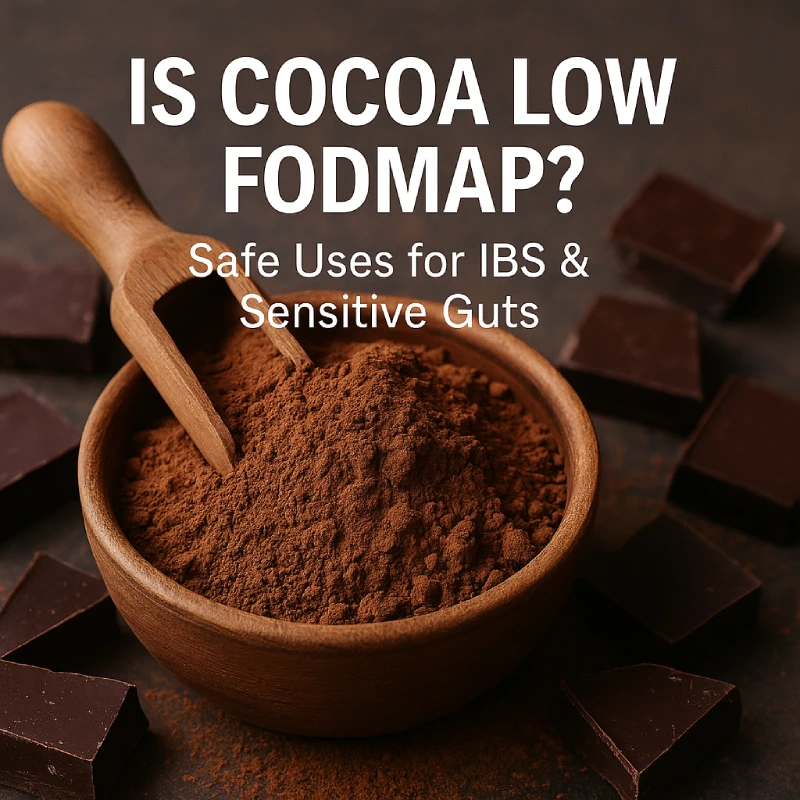
Is Cocoa Low FODMAP? The Short Answer
Yes, cocoa powder is low FODMAP at around 2 teaspoons (typically 8g).
This standard low FODMAP serve allows most people with IBS to enjoy cocoa safely during the elimination phase. Sensitive individuals may tolerate more or less, but this level is a reliable starting point.
Why portion size matters
Even low FODMAP foods can become high FODMAP when consumed in excess. Larger amounts of cocoa may contain enough GOS and fructans (present in small levels naturally in cocoa beans) to cause symptoms in some people.
Cocoa vs. Cacao: Are They the Same for IBS?
Many readers ask whether cacao is better tolerated than cocoa.
Here’s a simple comparison:
Cacao Powder
- Less processed
- Higher in antioxidants
- Often labelled “raw cacao”
- FODMAP profile: similar to cocoa
Cocoa Powder
- Heat-treated
- More mellow flavour
- Widely available
- Also low FODMAP in small amounts
Both can be included on a low FODMAP diet, provided you keep to appropriate serving sizes. What matters most is the quantity, not whether you choose cacao or cocoa.
Why Cocoa Can Sometimes Trigger Symptoms, Even When Low FODMAP
You might be thinking: If cocoa is low FODMAP, why do I still feel bloated or crampy after eating chocolate?
You’re not imagining it. But it isn’t necessarily the FODMAPs.
1. Caffeine and theobromine
Cocoa contains caffeine-like compounds that can stimulate the gut. Some people with IBS, particularly those prone to urgency, may experience looser stools or cramping.
2. High fat content in chocolate bars
Fat slows digestion and can trigger gut motor reflexes that increase sensitivity. While cocoa itself is low fat, chocolate bars are often high in fat.
3. Additives
Ingredients like sorbitol, xylitol, inulin, chicory root extract, and oligosaccharides can cause symptoms.
4. Eating chocolate quickly or in stressful moments
Stress affects gut motility. Even tolerated foods can feel “too much” on days when your digestive system is already overwhelmed.
Remember: managing IBS is not about perfection but about learning your own body’s thresholds with patience and kindness.
How to Choose Low FODMAP Cocoa Products
Because cocoa rarely appears alone in food products, choosing the right options is key. Here’s a simple checklist.
Look for:
- Pure cocoa powder (100% cocoa)
- Lactose-free chocolate milk made with approved ingredients
- Dark chocolate with 70% or more cocoa, in small serves
- Hot chocolates made from cocoa rather than mixes full of additives
Avoid or use with caution:
- Sugar-free chocolate containing sorbitol, mannitol, xylitol or isomalt
- Chocolates containing chicory, inulin or FOS
- Milk chocolate in large servings
- Hot chocolate mixes containing high-FODMAP ingredients
Read labels slowly and kindly, there’s no rush to “get it right” immediately.
Low FODMAP Serving Sizes for Cocoa & Chocolate
Below is a gentle guide to help you enjoy cocoa without worrying about flare-ups.
Pure Cocoa Powder
- Low FODMAP: 2 tsp (approx. 8g)
- Larger serves may become high in GOS.
Dark Chocolate (70% or more)
- Low FODMAP: around 20g (2–3 squares)
- Higher cocoa percentages = less milk, but still watch fat levels.
Milk Chocolate
- Low FODMAP: about 15g
- Higher lactose = smaller tolerable portion.
Cacao Nibs
- Generally contain similar compounds to cocoa
- Tolerated by some, but stick to ≤10g to begin with
Cacao or cocoa in smoothies
If you’re blending with:
- Banana: choose unripe, firm bananas
- Milk: use lactose-free or plant milks tested as low FODMAP (e.g., almond milk in small serves, oat milk only if certified low FODMAP in your region)
Health Benefits of Cocoa (When Tolerated)
Beyond its comforting flavour, cocoa offers surprising nutritional value that can support overall wellbeing.
Rich in polyphenols
These antioxidant compounds may support cardiovascular health and reduce inflammation in the body.
Mood support
Cocoa contains naturally occurring compounds that promote serotonin production. Many readers describe feeling calmer or more uplifted after enjoying a small cocoa-based drink.
Mineral content
Cocoa contributes magnesium, iron and potassium, nutrients that support energy and nervous system function.
A small portion can be nourishing both physically and emotionally, especially when enjoyed mindfully.
How to Use Cocoa Safely on a Low FODMAP Diet
Here are gentle, gut-friendly ideas for enjoying cocoa while keeping symptoms calm.
1. Hot Cocoa with Lactose-Free Milk
Warm, comforting and simple. Use:
- 1–2 teaspoons cocoa
- 1 cup lactose-free milk
- A little maple syrup if sweetness is needed
2. Chocolate Overnight Oats
Mix:
- Certified low FODMAP oats
- Lactose-free yoghurt
- 1 tsp cocoa
- Strawberries or raspberries (safe portions)
3. Low FODMAP Chocolate Chia Pudding
Combine:
- 2 tsp cocoa
- Chia seeds
- Lactose-free milk
- Vanilla essence
- Maple syrup to taste
4. Cocoa in Baking
Use cocoa powder in IBS-friendly recipes such as:
- Almond-meal brownies
- Low FODMAP banana bread (using firm bananas)
- Chocolate sponge cakes made with gluten-free flour
Just keep the cocoa within recommended serving sizes.
Reintroduction Phase: Testing Your Tolerance to Cocoa
If you’re in the Reintroduction Phase, cocoa is not typically one of the standard reintroduction foods listed by Monash University (as reflected in their 2025 update). However, you can reintroduce cocoa carefully as an “additional challenge” if:
- You crave chocolate regularly
- You suspect it might be a personal trigger
- You want to expand your long-term food variety
How to test cocoa tolerance
Day 1: 1 teaspoon
Day 3: 2 teaspoons
Day 5: 3 teaspoons (or equivalent chocolate amount)
Monitor for:
- Bloating
- Cramping
- Bowel changes
- Reflux
- Anxiety (especially in caffeine-sensitive people)
There’s no rush. Your digestive system needs compassion, not pressure.
Common Mistakes When Eating Cocoa on a Low FODMAP Diet
Many people accidentally trigger symptoms with cocoa because of easily overlooked factors. Here are the big ones to watch.
Mistake 1: Assuming all chocolate is equal
Different brands vary enormously in lactose and additives.
Mistake 2: Forgetting cumulative FODMAP load
You may tolerate cocoa alone but not when combined with other moderate or high FODMAP ingredients.
Mistake 3: Eating chocolate quickly
Rapid eating increases bloating risk due to swallowed air and gut motility changes.
Mistake 4: Choosing sugar-free chocolate
Polyols (sorbitol, mannitol, xylitol) are notorious IBS triggers.
Mistake 5: Overlooking stress
The gut–brain connection is powerful. Even safe foods may feel harsh on stressful days.
How to Make Chocolate-Flavoured Drinks IBS-Friendly
A few small swaps make a huge difference.
Choose the right milk
- Lactose-free milk → best choice
- Almond milk → small serves (mostly water, so low FODMAP)
- Soy milk (soy protein-based) → okay in some regions; check your product
- Oat milk → only if certified low FODMAP in your country
Sweeteners to use
- Maple syrup
- Table sugar
- Golden syrup (small portions)
Sweeteners to avoid
- Honey (high fructose)
- Agave
- Sorbitol, xylitol, mannitol
- Inulin-based syrups
Add-ins
- Cinnamon (safe)
- Vanilla extract
- A tiny pinch of sea salt to enhance chocolate notes
Can You Eat Cocoa Every Day on a Low FODMAP Diet?
Yes, if you tolerate it well and stick to safe serves.
Many people with IBS enjoy cocoa daily in hot drinks or baking without symptoms. Others need to keep it to occasional use due to caffeine sensitivity or fat content in chocolate products.
Your tolerance is unique. Let your body guide you.
When Cocoa Might Not Be Right for You
Even if cocoa is low FODMAP, you may need to avoid it temporarily if:
- You’re extremely sensitive to caffeine
- You’re in a flare-up and your gut is reactive to most foods
- You have a history of reflux or heartburn triggered by chocolate
- Chocolate triggers anxiety symptoms
Take breaks when needed. Food freedom also includes the freedom to pause.
FAQ about Cocoa and the Low FODMAP Diet
Is cocoa low FODMAP?
Yes, cocoa powder is low FODMAP in small servings (around 2 teaspoons). Larger portions may become high in GOS, so moderation is key.
Can I drink hot chocolate on a low FODMAP diet?
Absolutely, with a few tweaks. Use pure cocoa and lactose-free or approved low FODMAP plant milks. Avoid hot chocolate mixes containing additives, lactose or polyols.
Is dark chocolate low FODMAP?
Dark chocolate is low FODMAP in small amounts, usually 20g (around 2–3 squares). Higher cocoa content generally means a safer option.
Is cacao powder low FODMAP?
Yes, cacao powder has a similar FODMAP profile to cocoa. Stick to small serves to avoid symptoms.
Why does chocolate sometimes upset my stomach if it’s low FODMAP?
This can happen due to caffeine, fat content, or additives, not FODMAPs. Some people have gut sensitivity to stimulants in cocoa even when the FODMAP load is low.
How much cocoa is safe on a low FODMAP diet?
Around 8g (2 teaspoons) of cocoa is considered a safe low FODMAP serve for most people.